Protect Tenant Deposits: 30-Day Deadline Explained
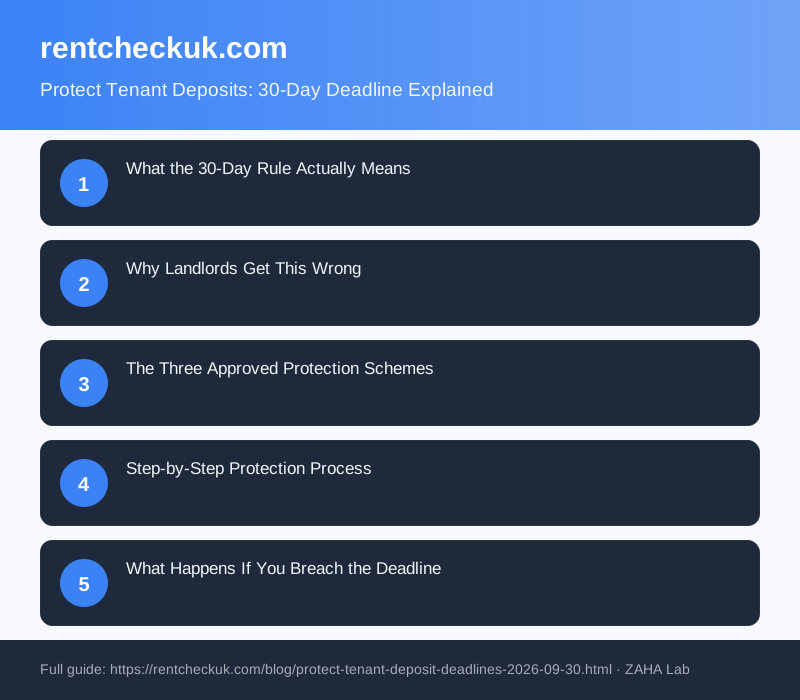
One in five UK landlords breaches the deposit protection deadline, costing £3,000 to £5,000 in legal fees and compensation claims. If you collect a tenant deposit but fail to protect it within 30 days of receiving it, your tenant can claim unlimited damages. Here's what the law requires and how to protect yourself.
What the 30-Day Rule Actually Means
The Tenancy Deposit Scheme regulations state that any deposit collected from a tenant must be paid into one of the three authorised protection schemes within 30 calendar days. This isn't optional. It's not 30 business days, and it doesn't reset if you collect a replacement deposit. The clock starts the moment money enters your account.
The requirement applies whether you collect the deposit directly, through a lettings agent, or via a property management company. If your agent holds the deposit but hasn't registered it in your name within 30 days, you remain liable for the breach.
Why Landlords Get This Wrong
The most common breach happens when landlords collect a holding deposit that later becomes the full security deposit. If you collected £500 as a holding deposit on September 1st but it only became the tenancy deposit on September 20th when the tenant moved in, the 30-day clock started on September 1st. You must protect the full amount by October 1st, not by October 20th.
Another frequent mistake occurs with payment timing. A tenant pays the deposit on Friday afternoon. Your bank doesn't clear it until Monday. Many landlords count from Monday, but the law counts from when you receive it, not when you process it. If the tenant's payment clears your account on Friday evening, Friday counts as day one.
Partial deposits also catch people out. Some landlords ask tenants to pay the deposit in instalments. Once you've received the first payment, that portion must be protected within 30 days. The clock doesn't restart for the second instalment.
The Three Approved Protection Schemes
All deposits in England, Scotland, Wales, and Northern Ireland must be held in one of these government-authorised schemes:
- Insured Schemes: The landlord or agent holds the money, and the scheme provider insures it. Examples include Deposit Protection Service and My Deposits. You keep control of the funds but can't access them without the tenant's agreement or a court order. This is the most popular option for private landlords.
- Custodial Schemes: The scheme holds the actual money. The landlord has no access to it. This suits landlords who want complete separation from tenant funds. Examples include the Tenancy Deposit Scheme (custodial) and Capita.
- Government Backed Scheme: Provides an alternative custodial option. All three scheme types offer equal legal protection.
Your deposit protection guide should explain which scheme works best for your letting model. Each scheme charges an administration fee (typically £15-50) and requires you to provide prescribed information to the tenant within 30 days.
Step-by-Step Protection Process
Day 1-5: Tenant pays deposit. You receive the money. Start the 30-day countdown immediately.
Day 5-15: Choose an authorised scheme. Register online or by post. You'll need the tenant's full name, address, and deposit amount. The scheme will give you a unique registration number.
Day 15-28: The scheme sends you prescribed information. This legal document explains the tenant's rights, how disputes are resolved, and how to recover the deposit at the end of the tenancy. You must provide a copy to the tenant along with your contact details and the scheme's contact details.
Day 28-30: Send the prescribed information to the tenant. Use email or post, but confirm delivery. Registered mail or email with read receipt is safest. Keep proof you sent it.
Day 30: The deposit is now legally protected. Both you and the tenant should have copies of the prescribed information.
What Happens If You Breach the Deadline
If you fail to protect the deposit within 30 days, the tenant can bring a claim in the small claims court at any point during the tenancy or up to three years after it ends. If a court finds you've breached the rules, you must pay:
- Return the deposit in full, plus
- Compensation equal to three times the deposit amount (this is mandatory, not discretionary)
This applies even if you protected the deposit later and acted in good faith. The tenant doesn't need to prove they've suffered loss. For a £1,500 deposit, the compensation would be £4,500 on top of returning the money.
You also cannot make deductions from the deposit, issue a section 21 notice during the breach period, or use the deposit in any other way. The deposit is frozen until the breach is resolved.
Common Mistakes to Avoid
Confusing it with a reference: A reference fee is not a deposit and doesn't need protection. A deposit is held as security against damage or unpaid rent and must be returned at the end of the tenancy.
Assuming your agent handled it: Always confirm in writing that your lettings agent has protected the deposit. Don't assume. Request a copy of the prescribed information to verify. You remain liable even if the agent fails to protect it.
Transferring the deposit mid-tenancy without updating the scheme: If you sell the property or change lettings agents, notify the protection scheme immediately. The deposit must remain in the same scheme unless the tenant agrees to transfer it.
Holding the money in a separate personal account and "protecting" it later: Protection must happen in the actual scheme, not just in a separate bank account. The tenant's money must be lodged with the scheme provider.
FAQ
Can I extend the 30-day deadline if I'm waiting for more information from the tenant?
No. The 30-day deadline is fixed from the day you receive the money. If the tenant hasn't provided their full address or preferred contact method, you can protect the deposit with the information you have and update the scheme later. Delay is not an excuse.
What if the tenant disputes the amount or claims they paid more?
Protect whatever amount the tenant paid. If there's a dispute about whether additional payments were made, that's a separate matter from protection. Protect the confirmed amount on time. Disputes over the deposit amount can be resolved through the scheme's dispute resolution service after the tenancy ends.
Do I need to protect holding deposits?
In England, holding deposits under £50 or up to one week's rent do not need to be protected by law, though good practice suggests you should. However, once a tenancy is agreed, any amount held as security against damage or unpaid rent becomes a tenancy deposit and must be protected within 30 days regardless of size.
Can I use the deposit to cover unpaid rent or damage before the tenancy ends?
No. A protected deposit cannot be touched during the tenancy except by the scheme's dispute resolution process or a court order. You must pursue unpaid rent through small claims court separately. The deposit can only be deducted from at the end of the tenancy with the tenant's written agreement or through a formal dispute resolution.
If I protected the deposit after 30 days, can I still do it now?
Yes, protecting it late is better than not protecting it at all, but the breach has already occurred and the tenant can claim compensation. The best course is to protect the deposit immediately if you haven't already and speak to a letting agent or solicitor about your exposure to a potential claim.
Related Products
Deposit Protection Scheme Membership
Register your tenant deposits with an authorised scheme like Deposit Protection Service or My Deposits. Includes prescribed information, dispute resolution, and peace of mind.
View SchemesUK Landlord Law Handbook
Comprehensive guide to deposit protection, section 21 notices, right to rent, gas safety, and all major compliance requirements. Updated for 2026 regulations.
Buy on Amazon UKLettings Management Software
Automate deposit protection timelines, send prescribed information, and track compliance deadlines. Integrates with your bank and the scheme providers.
Explore Options