Tenant Reference Red Flags: A Landlord's Guide
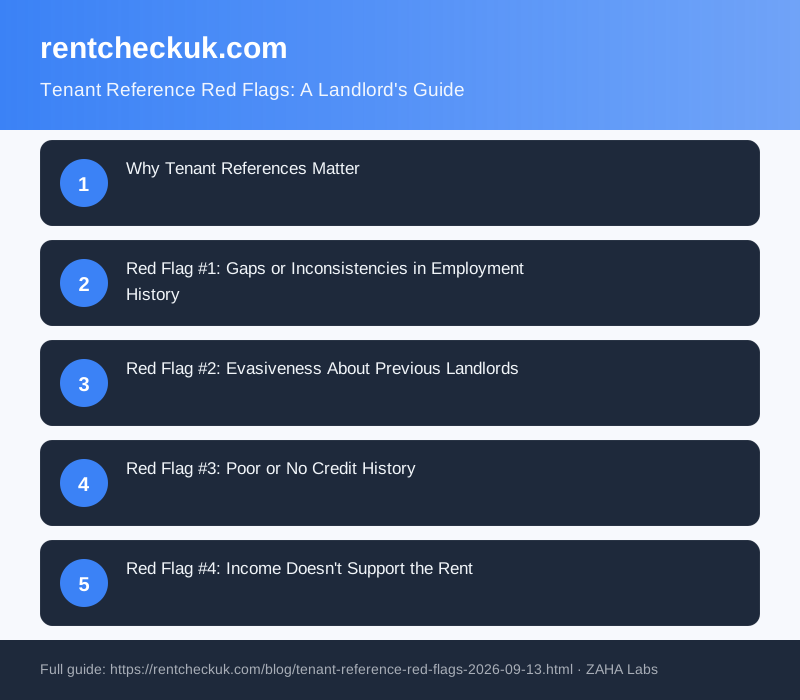
One in five UK landlords report significant problems with problem tenants they didn't properly vet. The good news? Most red flags in tenant references are obvious once you know what to look for. In this guide, we'll walk you through the critical warning signs that suggest a tenant application needs closer scrutiny or rejection—helping you protect your investment and avoid costly disputes.
Why Tenant References Matter
A strong tenant reference check is your first line of defence against problem tenants. References from previous landlords reveal behaviour patterns—whether a tenant paid rent on time, respected the property, and communicated well. Employment references confirm income stability, while credit checks show financial responsibility. Yet many landlords rush this process or rely on cursory checks, missing critical warning signs that could cost thousands in lost rent, damage, or eviction fees.
The challenge is knowing what to look for. Not every issue is a deal-breaker, but certain red flags should trigger deeper investigation or outright rejection. Let's explore the most important ones.
Red Flag #1: Gaps or Inconsistencies in Employment History
Employment references serve two purposes: confirming income and revealing stability. When a tenant's stated employment history contains unexplained gaps or changes jobs every few months, it raises questions about reliability and income consistency.
Look for unexplained periods of unemployment lasting more than a few months, frequent job changes without explanation, or roles that don't align with their income claims. If a tenant claims £50,000 annual salary but works part-time retail, that's inconsistent. Always verify employment directly with their employer—don't rely solely on what the tenant reports.
Red Flag #2: Evasiveness About Previous Landlords
If a tenant can't or won't provide landlord references, this is a serious warning sign. Common excuses like "I only rented once" or "I can't contact my old landlord" are worth probing further. A genuine tenant should be able to provide at least one previous landlord reference, even if they've only rented once.
When you do reach previous landlords, watch for vague answers or reluctance to answer specific questions. If a landlord is evasive about whether rent was paid on time or whether the tenant maintained the property, they're likely hiding problems. Professional landlord reference services like OpenRent tenant referencing can help here, as they follow standardised questions and provide written documentation.
Red Flag #3: Poor or No Credit History
A credit check is essential—it reveals defaults, county court judgements, and financial irresponsibility. Tenants with multiple missed payments, active debts, or recent defaults have already demonstrated they struggle to meet financial obligations. That's a strong predictor they'll be late with rent.
Poor credit isn't always a deal-breaker (people face genuine hardship), but it should trigger a conversation. Ask them to explain the marks on their credit file. If they're defensive or blame others entirely, that's concerning. Consider requiring a guarantor in these cases—someone with better credit who'll cover rent if the tenant defaults.
Red Flag #4: Income Doesn't Support the Rent
A basic rule: monthly rent shouldn't exceed 30% of gross monthly income. If a tenant claims £1,800 monthly income but wants to rent a £800/month property, the maths work. But if it's £1,500 income and £900 rent, they're stretching their budget dangerously. Tenants living on the financial edge are more likely to fall into arrears.
Verify income independently. For employed tenants, request a recent payslip or employment letter. For self-employed tenants, ask for the last two years of accounts or tax returns. For those on benefits, request proof of entitlement. If the numbers don't add up, trust your instinct—they probably won't.
Red Flag #5: Multiple Previous Evictions or Negative References
If a previous landlord mentions an eviction, possession order, or court case, this is a major red flag. It suggests the tenant has a history of serious rent arrears or antisocial behaviour. One eviction might be an anomaly; two or more suggests a pattern.
Equally, if multiple references describe similar issues—complaints about noise, damage, or unresolved disputes—you're seeing a consistent pattern. Don't dismiss these as subjective complaints. When several landlords report the same problem, it's usually accurate.
Red Flag #6: Vague or Unrealistic Reasons for Leaving Previous Properties
When you ask "Why are you moving?", pay attention to the answer. Reasonable answers include "The landlord sold the property," "I need more space," or "I'm relocating for work." Vague answers like "It just wasn't right" or "The landlord and I didn't get on" warrant follow-up questions.
If a tenant's story doesn't match what their previous landlord says, you've caught a lie. Even small inconsistencies suggest dishonesty. Always cross-check tenant claims against what previous landlords report.
Red Flag #7: Reluctance to Provide References or Documents
A legitimate tenant should willingly provide references, employment verification, and credit check consent. If someone resists or makes excuses—"I don't feel comfortable with that," "It's too invasive," "I'll sort it later"—treat it as a red flag. Honest tenants want to move quickly through the process to secure a property they've chosen.
Resistance often signals the tenant knows their references or credit will show problems. Protect yourself by making referencing and credit checks a non-negotiable part of your tenancy agreement.
What to Do When You Spot Red Flags
First, don't ignore your instincts. If something feels off, it probably is. Here's your action plan:
1. Investigate deeper. Ask follow-up questions and request additional documentation. If a tenant can't explain a gap in employment, ask for proof. If a reference is concerning, pick up the phone and dig deeper.
2. Use professional services. A tenant referencing service removes the guesswork and provides legal protection. They'll verify employment, credit, and previous landlords to a professional standard.
3. Know when to walk away. Red flags like evictions, ongoing fraud investigations, or income that doesn't support the rent are usually deal-breakers. Rejecting an application now is far cheaper than dealing with a problem tenant later.
4. Request a guarantor. If a tenant has minor red flags (poor credit, self-employment) but seems promising otherwise, require a guarantor—usually a parent or close relative with stable income and good credit—who'll guarantee rent payment.
5. Keep detailed records. Document every referencing step, every question, and every answer. If a tenancy later becomes problematic, these records protect you legally and support any eviction proceedings.
Common Landlord Mistakes to Avoid
Don't rely on a single reference. Always try to get at least two previous landlord references and verify employment independently. A single glowing reference can be misleading—multiple consistent reports tell the real story.
Don't ignore instincts because the tenant is charming or seems likeable. Personality doesn't predict whether someone pays rent on time. Stick to facts: income, credit history, previous landlord reports, and employment verification.
Don't rush the process. It's tempting to fast-track applications for appealing tenants, especially in competitive markets. But those 30 minutes spent on thorough referencing can save you thousands in later disputes or lost rent.
FAQ
Can I legally reject a tenant based on a poor credit history?
Yes, but with limits. You can reject based on credit if it's a consistent issue—multiple defaults, county court judgements, or recent missed payments. However, you cannot discriminate based on protected characteristics (age, race, religion, etc.). If you reject someone with poor credit, apply the same standard fairly to all applicants.
What's a reasonable income-to-rent ratio?
The standard is 30% of gross monthly income. So if rent is £800/month, the tenant should earn at least £2,667/month gross. Some landlords use 35%, especially in areas with high rents. Higher ratios increase default risk, so be cautious about stretching this rule.
Should I use a professional referencing service or do it myself?
Professional services are worth the cost (typically £50–150 per applicant). They provide legal protection, standardised questioning, faster verification, and written records. For a landlord managing several properties, this consistency is invaluable. For a single property, a DIY approach works if you're thorough—but professional services are lower risk.
What if a tenant can't provide previous landlord references?
It depends. First-time renters may genuinely have no previous landlord. In that case, request references from employers, colleges, or character references instead. If someone's been renting but can't or won't provide landlord references, it's a red flag. Ask why. If they're evasive, consider requesting a guarantor or requiring a larger deposit.
Can I ask about employment history if it might reveal protected characteristics?
Yes, you can ask about employment history and income to verify affordability. However, avoid questions that might reveal protected characteristics (age, health, religion, etc.). Focus on facts: "What's your current employment?" "Can you provide a recent payslip?" rather than "How long have you been working?" or "Have you had any time off for health reasons?"
Related Products & Services
To help streamline your referencing process and protect your rental investment, here are tools and resources we recommend:
OpenRent Tenant Referencing
Automated tenant referencing service that verifies employment, credit history, and previous landlord references quickly and legally.
Learn MoreHomelet Tenant Referencing
Professional referencing solution with credit checks, employment verification, and landlord references. Trusted by thousands of UK landlords.
Visit HomeletThe Landlord's Legal Handbook
Comprehensive guide covering tenant screening, legal compliance, and protecting yourself from problem tenants. Essential for landlords.
View on Amazon UK